01 · Character systems
Companion dialogue
Let companions answer follow-up questions, react to player choices, and preserve a recognizable tone across long sessions.
Explore realtime TTS-2 for character deliveryBuilding inworld voice ai for gaming means making characters listen, respond, and stay expressive while players interrupt, improvise, and move through a world at speed.
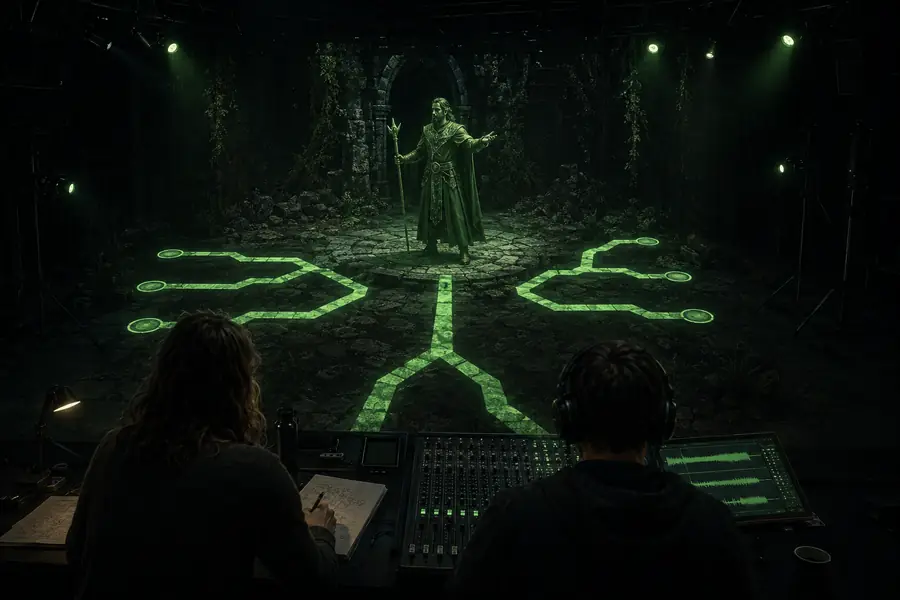
Players do not follow a perfect script. They interrupt a quest giver, speak over a companion, change direction, and expect the world to remember what just happened. Traditional game voice workflows often force teams to choose between a small set of recorded lines and an open-ended system that sounds slow, repetitive, or disconnected from the character.
Inworld gives gaming teams a realtime foundation for expressive voice AI, so dialogue can move with the player instead of waiting for the next pre-authored branch. The result is not simply more words. It is better timing, clearer intent, and characters that feel present inside the scene.
Let companions answer follow-up questions, react to player choices, and preserve a recognizable tone across long sessions.
Explore realtime TTS-2 for character deliveryUse player speech as an input for quests, NPC interactions, accessibility controls, or dynamic commands without breaking the game loop.
Explore speech-to-text for live turn detectionCreate a consistent voice identity for a hero, villain, narrator, or branded game world while keeping direction available to writers.
Explore voice cloning for signature charactersPrototype branching scenes, social moments, and ambient encounters before committing every variation to a recording schedule.
Review voice AI examples for interaction designThe strongest gaming implementations separate listening, reasoning, and delivery while keeping the handoff fast. This makes the system easier to tune and gives designers control over where generative behavior is welcome.
| Workflow attribute | Inworld approach | Conventional stack |
|---|---|---|
| Player input | Streaming speech with turn awareness | Button press or fixed command list |
| Character response | Contextual generation with controllable tone | Pre-recorded branch or delayed render |
| Voice direction | Pace, emotion, emphasis, and style cues | Separate takes for each variation |
| Session context | Conversation state can inform the next turn | Scene state managed outside audio |
| Tool actions | Call quests, inventory, or world systems | Hard-coded integration per branch |
| Localization | Voice direction can carry across languages | New recording pipeline per language |
| Iteration speed | Writers can test moments before final capture | Changes wait for casting and studio time |
A useful game voice AI moment is short, specific, and aware of what the player just did. The system should not narrate the whole scene. It should give the player a believable reason to keep talking.
“You said the bridge was safe. Why are the lights moving?”
“Because something crossed underneath us. Stay close, and do not step on the blue stones.”
context retained · tone directed · action available
Game voice AI should be reviewed like any other system that handles player input and produces public-facing content. Define which characters may improvise, moderate player prompts before they reach a voice, and make it clear when a response is generated. For cloned or performer-inspired voices, document consent, usage rights, retention, and where the output may appear.
Teams should also log prompts and tool calls at the level needed for debugging without retaining more personal data than the experience requires. Inworld can provide the realtime voice layer, but your game still owns the product policy: age suitability, escalation paths, content filters, and human review for exceptional cases.
The right implementation depends on the kind of interaction your game needs. These answers cover the questions teams usually ask before moving from a scripted prototype to a realtime voice experience.
There is no single best AI for every game. The useful choice depends on whether you need expressive character speech, fast player turn-taking, tool calls, multilingual delivery, or strict control over generated content. Inworld is a strong fit when realtime voice and conversational behavior need to work together inside a consumer-scale experience.
Yes. Teams can keep authored lines for important story beats while using generated responses for optional conversations, ambient characters, tutorials, or reactive moments. A hybrid workflow lets writers decide where improvisation adds value and where a locked performance is essential.
Start with a character brief, example lines, boundaries, and direction for pace, emotion, and emphasis. Pair that with session context and tool permissions. For more specialized characters, teams can explore voice cloning, while realtime TTS-2 helps shape the spoken delivery.
Adjust the expected monthly interactions to see an illustrative planning estimate. Actual usage depends on audio length, model selection, routing, and session behavior.
The difference is not that every game needs unlimited dialogue. It is that the moments surrounding authored content can respond with the timing, voice, and context players already expect from the rest of the game.
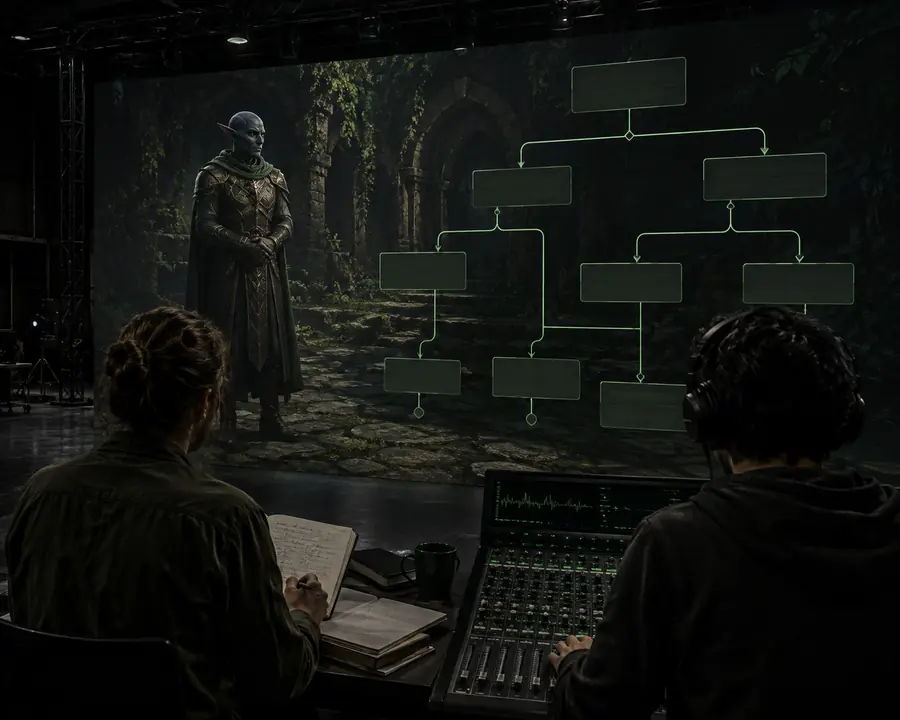
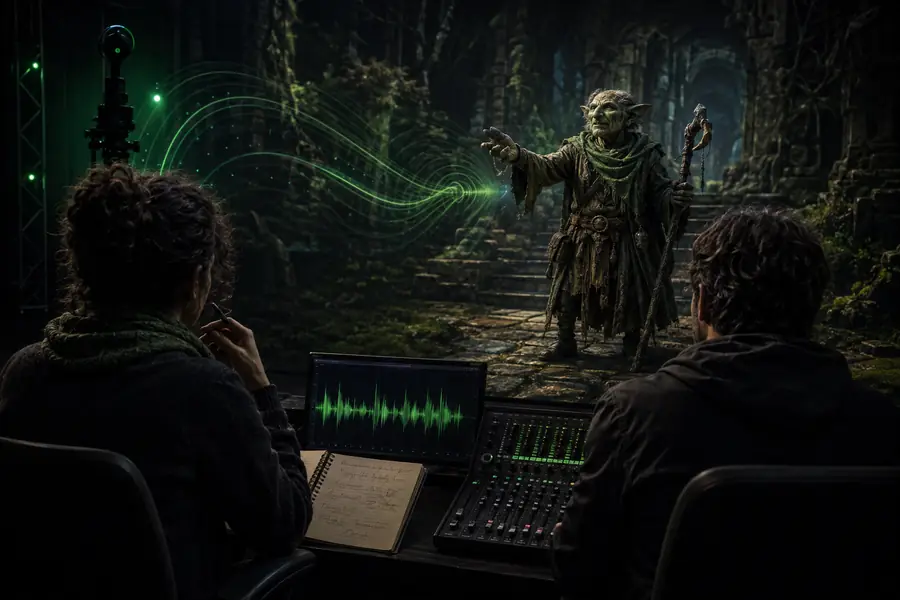
The visual pair represents a workflow change: keep the authored intent, then use realtime voice AI to make optional interactions more immediate, expressive, and playable.